

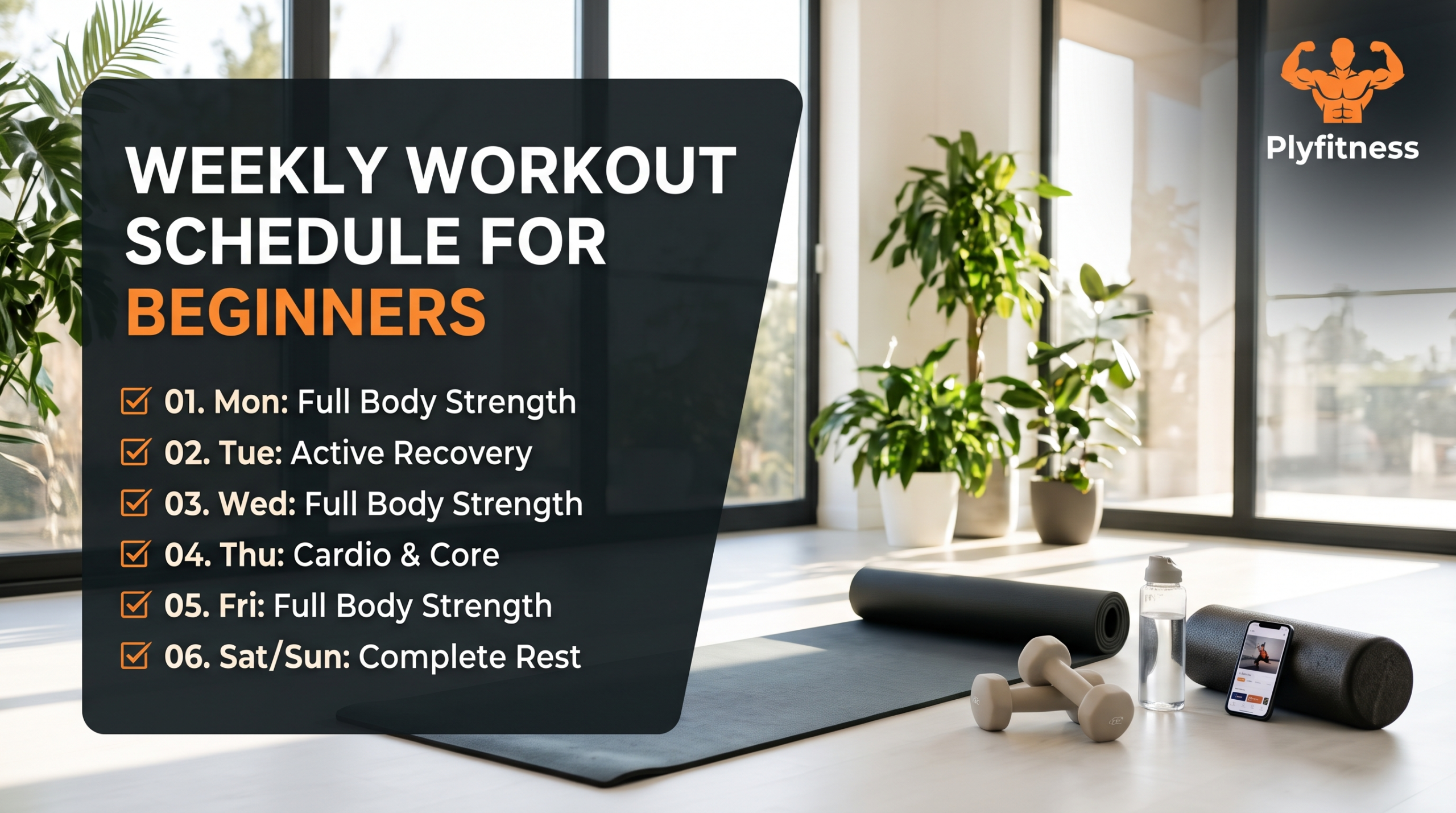
When you first decide to get in shape, the enthusiasm is usually high. You might buy new workout clothes, clear a space in your living room, or sign up for a local gym. However, that initial motivation often crashes when you face the reality of planning: what exactly should you do on Monday? What about Tuesday? Figuring out how to create a weekly workout schedule for beginners is the most critical hurdle to clear if you want to turn a sudden burst of motivation into a lifelong, sustainable habit.
A highly effective weekly workout schedule for beginners should include 3 to 4 days of structured exercise and 3 to 4 days of rest or active recovery. An ideal split involves 2 to 3 days of full-body strength training (to build muscle and boost metabolism) and 1 to 2 days of cardiovascular exercise (to improve heart health). The secret to success is never scheduling intense workouts on consecutive days; always alternate a training day with a rest or light movement day to allow your central nervous system and muscles to recover.
In this comprehensive guide, we will break down the exact components of a balanced fitness routine, provide you with three plug-and-play weekly templates, and explain the science behind scheduling your rest days so you can build strength safely and consistently.

Why You Need a Structured Workout Schedule
Waking up and deciding to “just do something” is a common beginner mistake. While any movement is better than no movement, winging your workouts often leads to three major problems: skipping sessions because you do not know what to do, overtraining the same muscle groups (like doing endless sit-ups every day), and failing to track your progress.
A structured weekly workout schedule solves these issues by providing:
- Predictability: Knowing you have a 30-minute lower body session on Tuesday eliminates decision fatigue. You just look at the plan and execute it.
- Balanced Development: A good schedule ensures you are working your chest, back, legs, and cardiovascular system evenly, preventing muscular imbalances and posture issues.
- Guaranteed Recovery: Muscles do not grow while you are exercising; they grow while you are resting. Scheduling your rest days makes recovery a mandatory part of your fitness routine rather than an afterthought.
The Core Components of a Beginner Routine
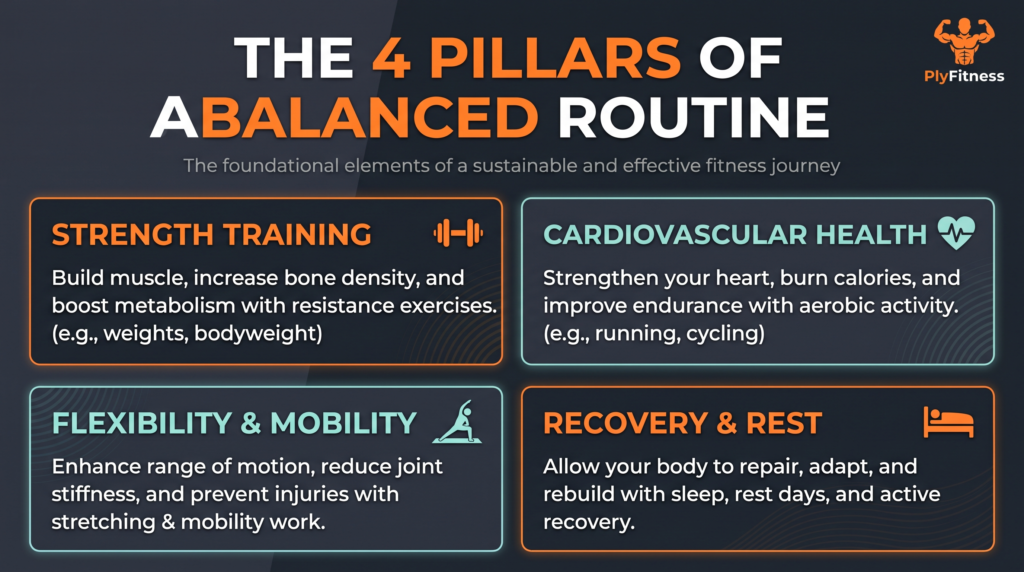
Before you can build your calendar, you need to understand the building blocks of fitness. The Centers for Disease Control and Prevention (CDC) and the World Health Organization (WHO) recommend a mix of the following elements for optimal adult health:
- Strength Training (Resistance Training): This involves lifting weights, using resistance bands, or performing bodyweight exercises like push-ups and squats. It builds lean muscle, increases bone density, and shapes your physique.
- Cardiovascular Exercise (Aerobic Training): Activities that raise your heart rate for a sustained period, such as brisk walking, cycling, swimming, or jogging. Cardio strengthens your heart, improves lung capacity, and burns calories.
- Flexibility and Mobility: Stretching and mobility work (like yoga) keep your joints healthy, improve your range of motion, and prevent injury.
- Active Recovery and Rest: Time dedicated to letting your body heal. Active recovery involves very light movement (like a casual walk), while complete rest means no strenuous physical activity at all.
Step-by-Step: How to Build Your Weekly Workout Schedule
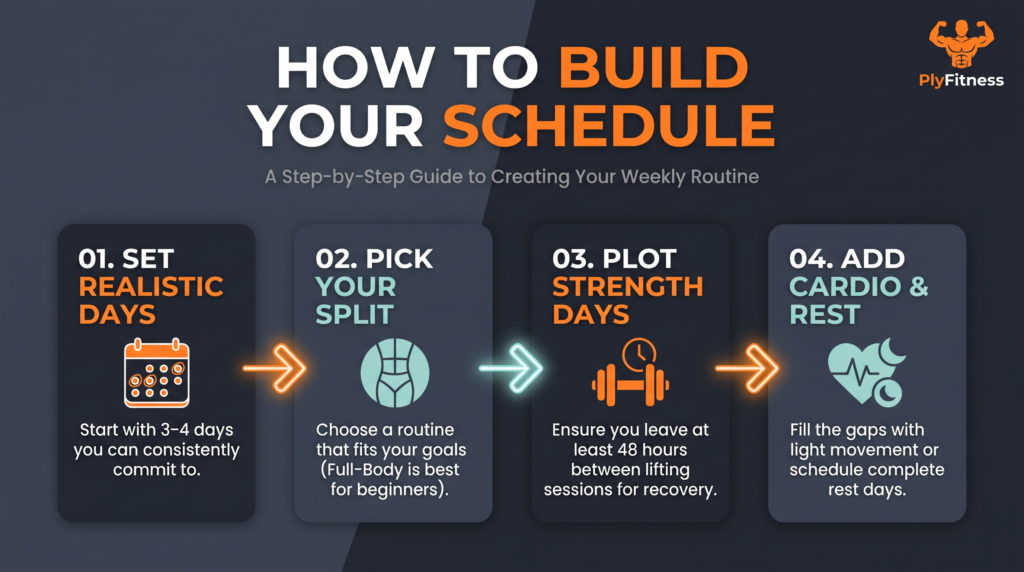
Now that you know what goes into a routine, let us build your custom schedule. Follow these four steps to create a plan that fits your life.
Step 1: Determine Your Realistic Frequency
Be honest with yourself about how much time you can dedicate to fitness. If you currently do not work out at all, do not aim for six days a week. It is much better to commit to 3 days a week and hit that goal perfectly than to aim for 5 days, fail by Wednesday, and give up entirely. For most beginners, 3 to 4 days a week is the absolute sweet spot.
Step 2: Choose Your Split (Workout Organization)
A “split” refers to how you divide your workouts throughout the week. Because beginners need less volume to stimulate muscle growth but benefit from frequent practice of the movements, a Full-Body Split is almost always the best choice. This means every time you strength train, you do one exercise for your legs, one for your chest, one for your back, and one for your core.
Step 3: Plot Your Anchor Days
Take your calendar and plot your hardest workouts on the days you typically have the most energy and time. For many, Monday, Wednesday, and Friday work best. Alternatively, if your weekdays are chaotic, make Saturday and Sunday your primary training days.
Step 4: Schedule Your Rest and Cardio
Once your strength training days are locked in, fill in the blanks. Never put two heavy full-body strength days back-to-back. Insert either a dedicated rest day or a light cardio day between them.
3 Sample Weekly Workout Schedules for Beginners
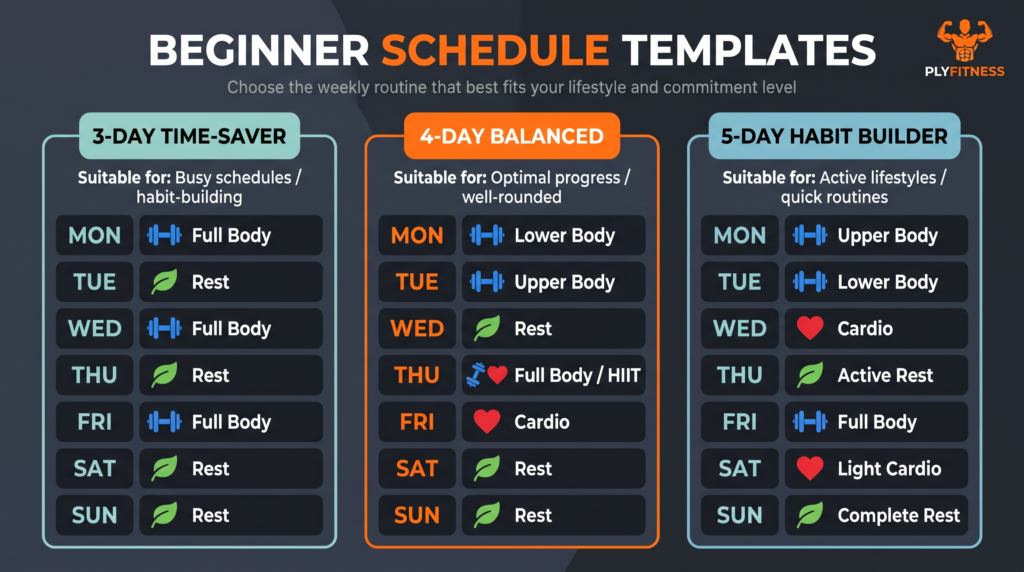
To help you get started immediately, here are three highly effective, scientifically sound templates you can adopt today.
Template 1: The 3-Day “Time-Saver” Split
This is the ultimate minimalist schedule. It requires a commitment of only three days a week for about 40 minutes per session. It is perfect for busy professionals or parents.
- Monday: Full-Body Strength Training (Squats, push-ups, rows, planks)
- Tuesday: Active Recovery (20-minute walk or gentle stretching)
- Wednesday: Full-Body Strength Training
- Thursday: Complete Rest
- Friday: Full-Body Strength Training
- Saturday: Moderate Cardio (30 minutes of brisk walking, cycling, or swimming)
- Sunday: Complete Rest and Meal Prep
Template 2: The 4-Day “Balanced” Routine
If you have a bit more time and want to dedicate specific days strictly to cardiovascular health, this is the ideal layout for burning fat and building endurance.
- Monday: Full-Body Strength Training
- Tuesday: Dedicated Cardio (30-40 minutes of jogging or stationary biking)
- Wednesday: Complete Rest
- Thursday: Full-Body Strength Training
- Friday: Complete Rest
- Saturday: Dedicated Cardio (30-40 minutes) + Core Work (10 minutes)
- Sunday: Active Recovery (Yoga or a long, leisurely walk)
Template 3: The 5-Day “Habit Builder”
This schedule is for the beginner who struggles with consistency and needs to do something every day to build the habit. The workouts here are shorter (20-30 minutes maximum) so you do not overtrain.
- Monday: Upper Body Strength (Push-ups, dumbbell rows, shoulder press)
- Tuesday: Lower Body Strength (Lunges, squats, glute bridges)
- Wednesday: Light Cardio (20 minutes of brisk walking)
- Thursday: Upper Body Strength
- Friday: Lower Body Strength
- Saturday: Active Recovery (Mobility work)
- Sunday: Complete Rest
Essential Safety and E-E-A-T Guidelines
As you implement your new weekly workout schedule for beginners, adhering to foundational health and safety guidelines is paramount.
- Prioritize the Warm-Up: Never jump straight into heavy lifting or intense cardio. Spend 5 to 10 minutes performing dynamic stretches (like arm circles, leg swings, and bodyweight squats) to increase blood flow and lubricate your joints.
- Understand DOMS: Delayed Onset Muscle Soreness (DOMS) is the deep ache you feel 24 to 48 hours after a new workout. It is entirely normal for beginners. Do not assume you are injured; light movement (active recovery) actually helps alleviate DOMS faster than sitting completely still.
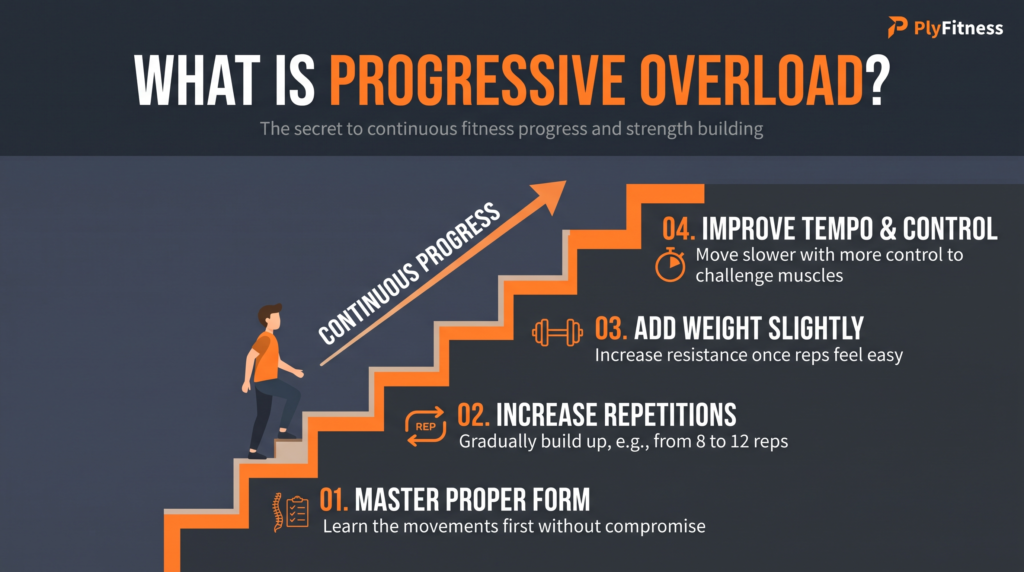
- Implement Progressive Overload: For your schedule to remain effective, you must gradually challenge your body. Once a workout feels easy, you must increase the difficulty by lifting a slightly heavier weight, adding a few more repetitions, or reducing your rest time.
- Listen to Sharp Pain: There is a difference between the burning sensation of a working muscle and the sharp, sudden pain of a joint or tendon issue. If you feel sharp pain in your knees, lower back, or shoulders, stop the exercise immediately.
- Consult Your Physician: If you are over 40, have a high BMI, a history of cardiovascular disease, or joint issues, consult a healthcare provider before starting any of the schedules listed above.
How to Stick to Your Schedule (Habit Stacking)
Having a perfect weekly workout schedule for beginners on paper means nothing if you do not execute it. To ensure consistency, use a psychological technique called “habit stacking.”
Habit stacking involves tying your new fitness behavior to an existing daily habit. For example, if you always drink a cup of coffee at 7:00 AM, commit to doing your 30-minute workout immediately after that final sip. Alternatively, if you want to work out after your job, change into your gym clothes the absolute second you get home, before you sit on the couch.
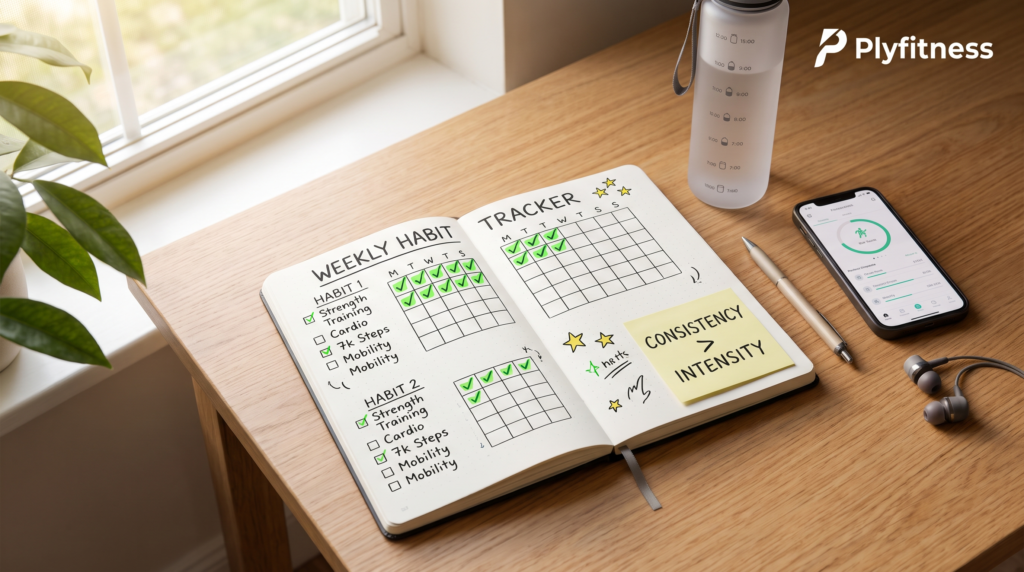
Track your progress meticulously. Keep a notebook or use a digital app to log the days you worked out and the weights you used. Seeing a visual streak of completed workouts is highly motivating and builds powerful self-efficacy.
Conclusion
Creating a weekly workout schedule for beginners is the ultimate blueprint for transforming your health. By committing to 3 to 4 days of balanced activity, prioritizing your rest days, and focusing on proper form, you will safely build muscle, burn fat, and increase your cardiovascular endurance. Remember that the perfect schedule is not the most grueling one; it is the one you can realistically stick to week after week, month after month. Pick one of the templates above, write it into your calendar today, and take that crucial first step toward a stronger you.
Frequently Asked Questions (FAQs)
How long should my daily workouts be?
For beginners, a highly effective workout should last between 30 and 45 minutes. This provides ample time for a 5-minute warm-up, 25 to 35 minutes of focused strength or cardio work, and a 5-minute cool-down.
Is it okay to work out the same muscles two days in a row?
No, beginners should avoid working the same muscle groups on consecutive days. Muscles need 24 to 48 hours to repair the micro-tears caused by strength training. Training them back-to-back can lead to overtraining and injury.
What should I do if I miss a scheduled workout day?
If you miss a day, do not try to double up your workouts the next day to compensate. Simply pick up your schedule on the next available day. Consistency over the course of a year matters far more than a single missed session.
Should I do cardio before or after my strength training?
If you are doing both in the same session, it is generally safer and more effective to do strength training first. Lifting weights requires a fresh central nervous system and full glycogen stores. Doing intense cardio first will fatigue your muscles, compromising your lifting form.
Can my active recovery day just be a rest day?
Yes. If your body feels excessively sore or you are extremely fatigued, swap an active recovery day (like a walk) for a complete rest day (no exercise). Always listen to your body’s signals over what is written on a piece of paper.
How long should I stick to a beginner schedule before changing it?
You should stick to your beginner weekly schedule for at least 8 to 12 weeks. This gives your body enough time to neurologically adapt to the movements and build foundational strength before introducing more complex or demanding routines.