


Walk into any gym, and you will immediately notice a geographical divide. On one side, rows of treadmills, ellipticals, and stationary bikes are filled with people sweating through intense aerobic sessions. On the other side, the free weight and machine sections are packed with people lifting dumbbells and barbells. If you are starting a fitness journey or trying to break through a frustrating plateau, this divide presents a confusing dilemma: should you focus on cardio or strength training?
Neither cardio nor strength training is universally “better”—they simply serve different primary purposes. Cardio is unparalleled for improving cardiovascular health, increasing endurance, and burning a high number of calories during the actual workout. Strength training is essential for building muscle mass, increasing bone density, and raising your resting metabolic rate so you burn more calories around the clock. For the vast majority of goals, including sustainable weight loss and longevity, a combination of both—often prioritizing strength training to alter body composition—is the scientifically backed answer.
In this comprehensive guide, we will break down the unique physiological benefits of both training styles, settle the debate on which is best for weight loss, and show you exactly how to combine them to achieve your specific fitness goals.

Understanding Cardiovascular Training (Cardio)
Cardiovascular exercise, often referred to as aerobic exercise, involves continuous movement that elevates your heart rate and breathing rate for a sustained period. This includes activities like running, cycling, swimming, brisk walking, and rowing.
During cardio, your body relies primarily on oxygen to produce the energy needed to sustain the activity. This system is incredibly efficient, allowing you to keep moving for extended periods.
The Major Benefits of Cardio
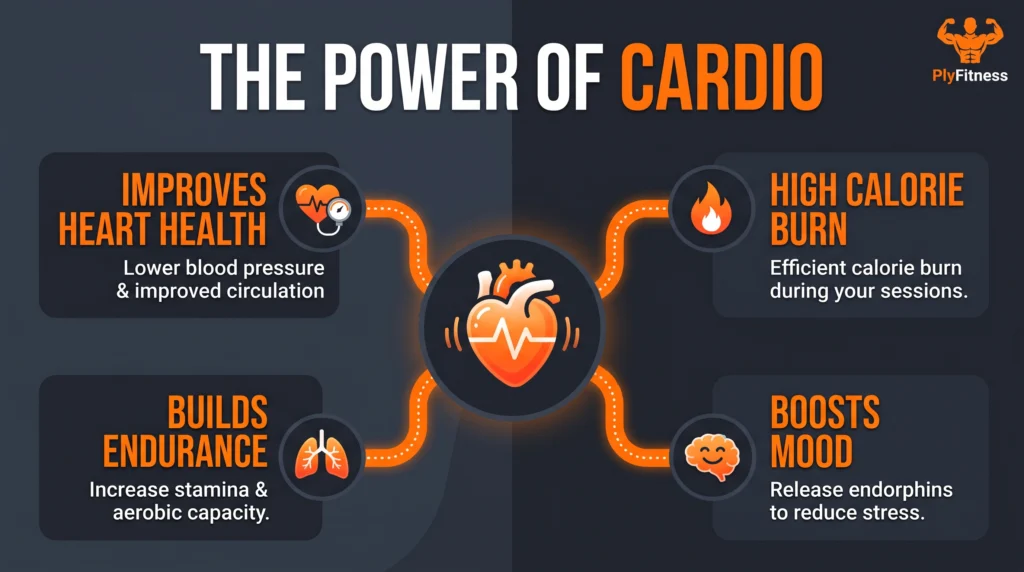
- Heart Health: Cardio is a workout for your heart. Regular aerobic exercise strengthens the heart muscle, lowers resting blood pressure, and improves blood circulation, significantly reducing the risk of heart disease.
- Immediate Calorie Burn: Minute for minute, moderate-to-vigorous cardio burns more calories during the actual workout than a standard weightlifting session.
- Endurance and Stamina: Cardio increases your lung capacity and the efficiency of your oxygen delivery system, making daily tasks like climbing stairs or carrying groceries feel effortless.
- Mental Wellbeing: Aerobic exercise is famous for the “runner’s high.” It stimulates the release of endorphins, which are natural mood lifters that help combat stress and anxiety.
Understanding Strength Training (Resistance Training)
Strength training, or anaerobic exercise, involves moving your muscles against some form of resistance. This resistance can come from dumbbells, barbells, resistance bands, weight machines, or even your own body weight (like push-ups and squats).
Unlike cardio, strength training occurs in short, intense bursts. Because the demand for energy is so high and immediate, your body relies on energy sources stored within the muscles rather than oxygen.
The Major Benefits of Strength Training
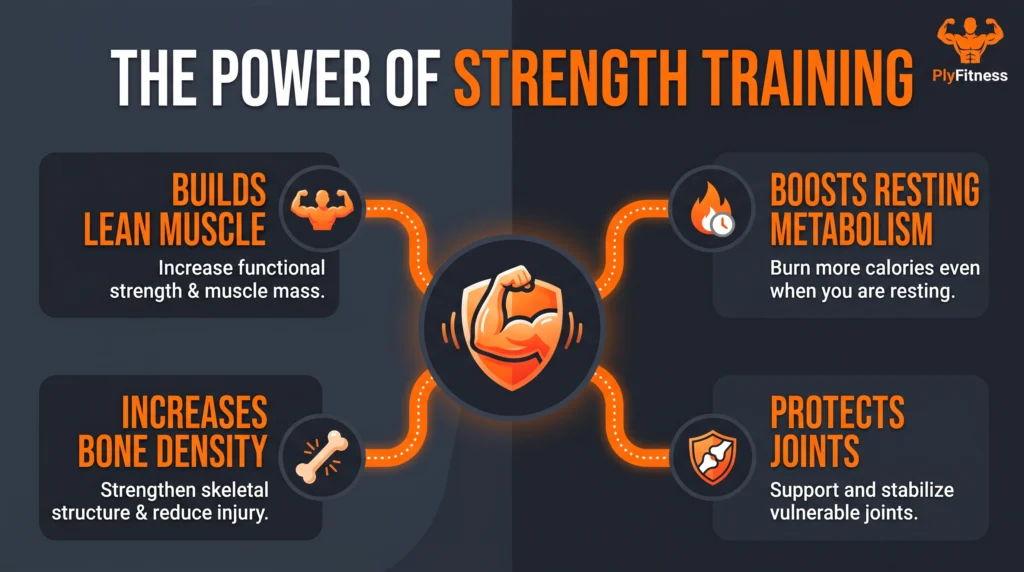
- Muscle Growth and Toning: Resistance training causes microscopic tears in your muscle fibers. When you rest and eat protein, your body repairs these fibers, making them thicker and stronger, resulting in a lean, “toned” appearance.
- The Afterburn Effect (EPOC): While strength training burns fewer calories during the workout, it triggers Excess Post-exercise Oxygen Consumption (EPOC). This means your body continues to burn calories at an elevated rate for hours—sometimes days—after you leave the gym as it works to repair muscle tissue.
- Increased Resting Metabolic Rate: Muscle is metabolically active tissue. The more muscle mass you carry, the more calories your body burns at rest, making long-term weight management much easier.
- Bone Density and Joint Health: Lifting heavy loads stresses the bones in a positive way, prompting them to increase in density. This is crucial for preventing osteoporosis and protecting joints from injury as you age.
The Weight Loss Debate: Which Burns More Fat?
If your primary goal is to lose weight, the cardio vs. strength training debate is likely at the top of your mind.
If you step on a treadmill for 45 minutes, you might burn 400 calories. If you lift weights for 45 minutes, you might only burn 200 calories. Looking strictly at the session data, cardio seems like the obvious winner for weight loss. However, this is only half the story.
Weight loss is not just about what happens in the gym; it is about what happens in the other 23 hours of the day.
When you lose weight exclusively through cardio and a calorie deficit, you lose both fat and muscle. Losing muscle lowers your resting metabolic rate, meaning your body needs fewer calories to survive. This is why people who only do cardio often hit severe weight-loss plateaus and quickly regain weight if they stop running.
Strength training preserves and builds muscle mass while you are in a calorie deficit. By maintaining your muscle, you keep your metabolic engine running high. Therefore, the ultimate fat-loss formula is a combination of both: a calorie deficit for weight reduction, strength training to ensure the weight lost is fat rather than muscle, and cardio to support heart health and increase the daily calorie burn.
Goal-Specific Recommendations
To determine which modality should dominate your weekly routine, you must clearly define your primary goal.
Goal: General Health and Longevity
If you simply want to live a long, healthy, and capable life, you need a balanced approach. The American Heart Association recommends at least 150 minutes of moderate-intensity aerobic activity per week, plus moderate-to-high-intensity muscle-strengthening activity on at least 2 days per week.
- The Split: 50% Cardio / 50% Strength.
Goal: Body Recomposition (Losing Fat and Gaining Muscle)
If you want to “tone up,” you are actually talking about body recomposition. You need to strip away body fat to reveal the muscle underneath, while simultaneously building that muscle to give your body shape.
- The Split: 70% Strength / 30% Cardio. Lift weights 3 to 4 times a week, and use cardio (like 20-30 minutes of brisk walking or swimming) on your off days to increase energy expenditure without interfering with muscle recovery.
Goal: Endurance Athletics (Marathons, Triathlons)
If you are training for a 10K, a marathon, or a cycling event, your cardiovascular engine is your highest priority. However, strength training cannot be ignored, as it fortifies your joints and connective tissues against the repetitive stress of running or cycling.
- The Split: 80% Cardio / 20% Strength. Focus your strength work on core stability and leg power 1 to 2 times a week.
How to Combine Cardio and Strength Training (Concurrent Training)
Combining both forms of exercise in a single program is known as concurrent training. The most common question beginners ask is: If I do both on the same day, which should I do first?
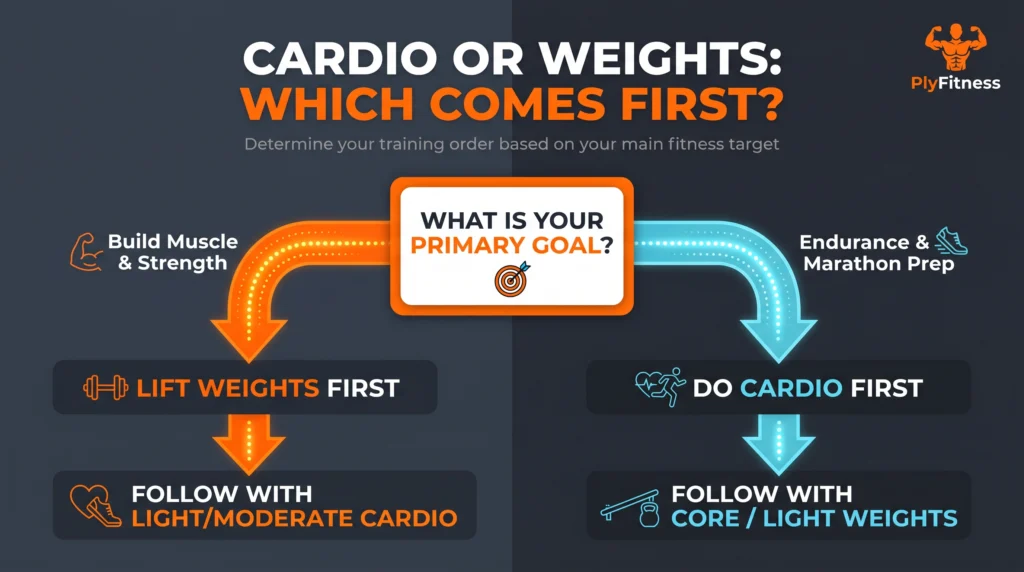
The golden rule of concurrent training is to do the exercise that aligns with your primary goal first.
If your main goal is to build muscle and increase strength, lift weights first. Strength training requires a massive amount of glycogen (stored carbohydrates) and peak central nervous system output. If you exhaust yourself on a 5-mile run before picking up a barbell, your form will suffer, and you will not be able to lift heavy enough to stimulate muscle growth.
Conversely, if you are training for a marathon and just want to do a quick upper-body circuit for general health, do your run while your legs are fresh, and hit the weights afterward.
If your goal is general weight loss, lifting weights first is generally recommended, followed by 15 to 20 minutes of moderate cardio to finish the session.
Essential Safety and E-E-A-T Guidelines
Whether you choose cardio, strength training, or a mix of both, keeping your body safe and healthy is the ultimate priority. Follow these evidence-based safety guidelines:
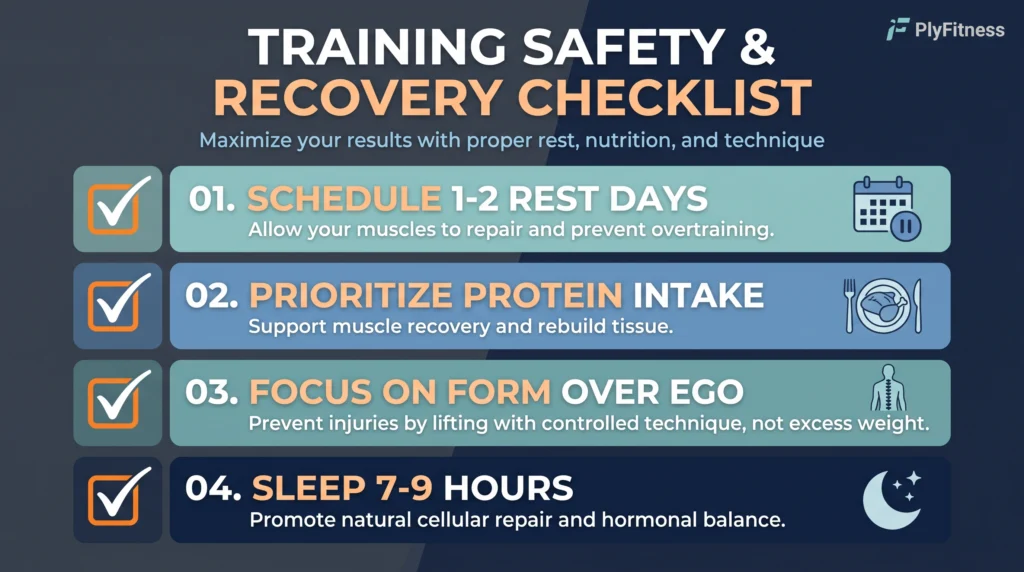
- Prioritize Recovery: Your cardiovascular system and your muscles both need time to recover. If you lift heavy weights 4 days a week and run 3 days a week, you have zero rest days. This leads to overtraining, elevated cortisol, and injury. Ensure you have at least one to two days of active recovery or complete rest.
- Fuel Your Body: Both cardio and strength training demand adequate nutrition. Consume enough protein to repair muscle tissue, and do not severely restrict carbohydrates, as they are the primary fuel source for high-intensity efforts.
- Master Your Form: Whether it is a barbell squat or your running stride, poor biomechanics lead to chronic pain. Never sacrifice proper form for the sake of lifting a heavier weight or running a faster mile.
- Consult a Physician: If you have a history of cardiovascular disease, joint issues, or are transitioning from a completely sedentary lifestyle, consult with a healthcare professional before beginning a rigorous exercise program.
Conclusion
The debate between cardio and strength training is ultimately a false dichotomy. You do not have to choose one identity over the other. A well-rounded, resilient, and healthy human body requires the robust heart and lung capacity built by cardiovascular exercise, as well as the dense bones and strong muscles forged by resistance training. By assessing your personal goals, intelligently structuring your weekly routine, and dedicating time to both, you can enjoy the unique, life-extending benefits of a truly complete fitness program.
Frequently Asked Questions (FAQs)
Does cardio kill muscle gains?
Moderate amounts of cardio will not destroy your muscle gains, provided you are eating enough calories and protein to support both activities. However, doing excessive amounts of high-intensity cardio immediately before a heavy lifting session can fatigue your muscles and hinder your strength progress.
Can I do cardio and weights on the same day?
Yes, concurrent training is highly effective for busy schedules. For best results, lift weights first when your energy and glycogen stores are highest, and follow it up with a moderate cardio session.
Which is better for losing belly fat?
You cannot spot-reduce fat from your belly with any specific exercise. However, strength training is superior for altering your overall body composition. Building muscle raises your metabolism, which helps you burn total body fat (including belly fat) more efficiently over time when paired with a caloric deficit.
Is walking considered good cardio?
Absolutely. Brisk walking is an excellent, low-impact form of cardiovascular exercise. It is highly sustainable, joint-friendly, and very effective for burning calories and improving heart health without severely taxing your central nervous system.
How many days a week do I need to lift weights?
To see meaningful progress in muscle tone and strength, you should aim to lift weights 2 to 4 times per week, ensuring you hit all major muscle groups.
Do I need to do cardio if I lift weights very fast?
Lifting weights with short rest periods (like circuit training) does elevate your heart rate and provides some cardiovascular benefits. However, it does not fully replace the sustained, steady-state aerobic adaptations that dedicated cardio (like a 30-minute run or cycle) provides for your heart and lungs.