Stepping onto the fitness path can feel daunting, especially if the thought of a crowded gym or purchasing expensive weights holds you back. Many beginners assume that building strength, improving cardiovascular health, and losing weight require a gym membership or specialized machinery. Fortunately, science and physiology prove otherwise. Your own body provides an exceptional, fully adjustable resistance system that is always available right in your living room.
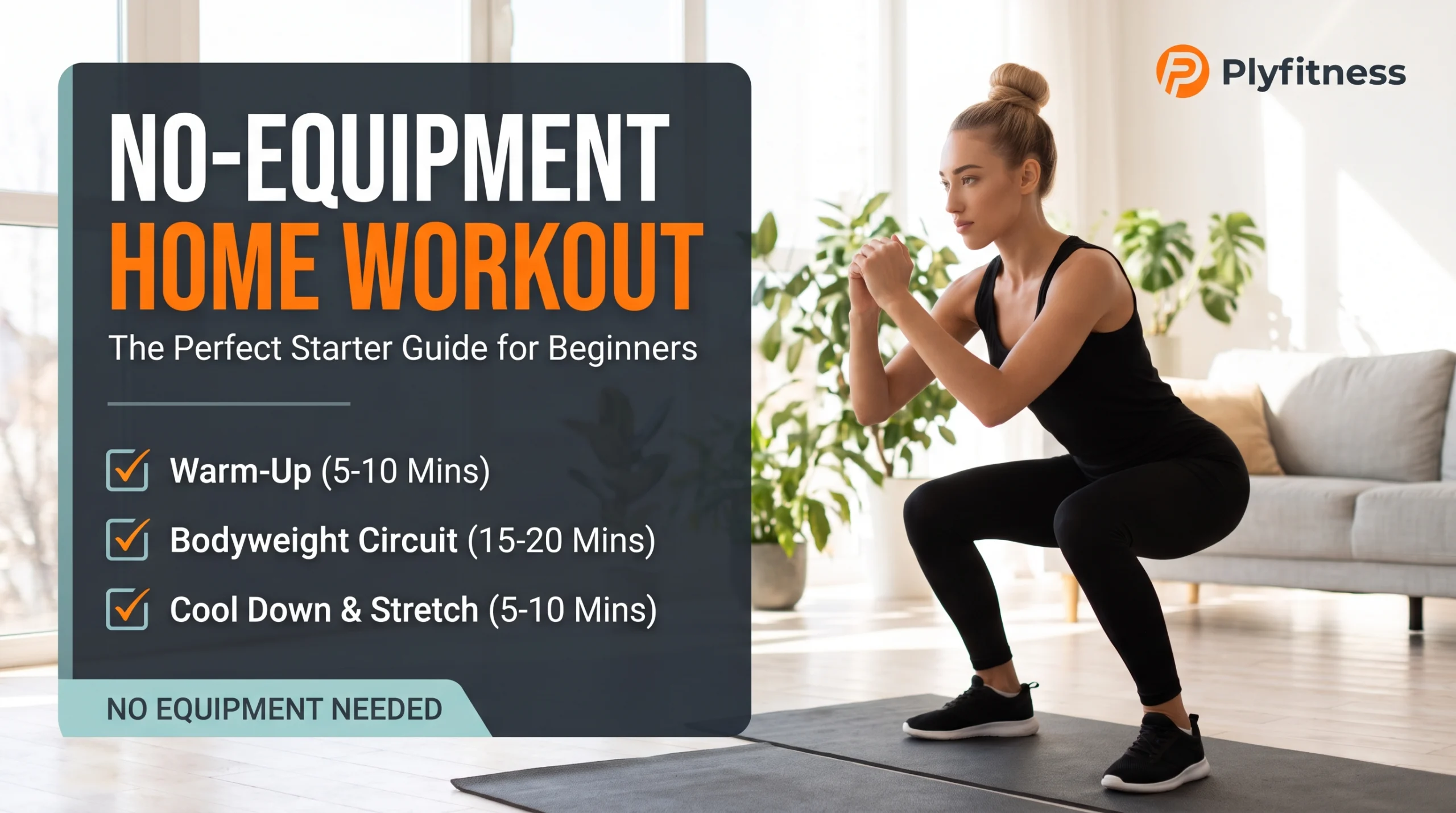
The best home workout for beginners with no equipment is a full-body bodyweight circuit focusing on fundamental movement patterns: squatting, pushing, hinging, and core stabilization. A beginner routine should consist of a 5-minute dynamic warm-up, a 15-to-20-minute circuit performed for 3 rounds (30 seconds of work per exercise followed by 30 seconds of rest), and a 5-minute cool-down. Performing this routine 3 times a week builds functional strength, burns fat, and establishes lifelong fitness habits without spending a dime.
In this comprehensive guide, we will break down the exact movements you need, explain how to execute them with perfect form, and provide a structured weekly schedule designed for total beginners.
Why Bodyweight Training is Ideal for Beginners
Before diving into the exercises, it is important to understand why bodyweight (calisthenics) training is the gold standard for starting your fitness journey:
- Zero Financial Barrier: You do not need to invest in dumbbells, resistance bands, or monthly gym dues. Your body provides all the resistance required.
- Mastery of Movement Mechanics: Bodyweight exercises teach you how to control your own center of gravity, which builds deep core stability, joint health, and functional coordination for daily life.
- Infinite Scalability: Every bodyweight movement can be made easier or harder by simply adjusting your leverage, tempo, or range of motion. If a standard push-up is too difficult, elevating your hands makes it accessible; as you get stronger, you can progress to harder variations.
The 4 Essential Movement Patterns
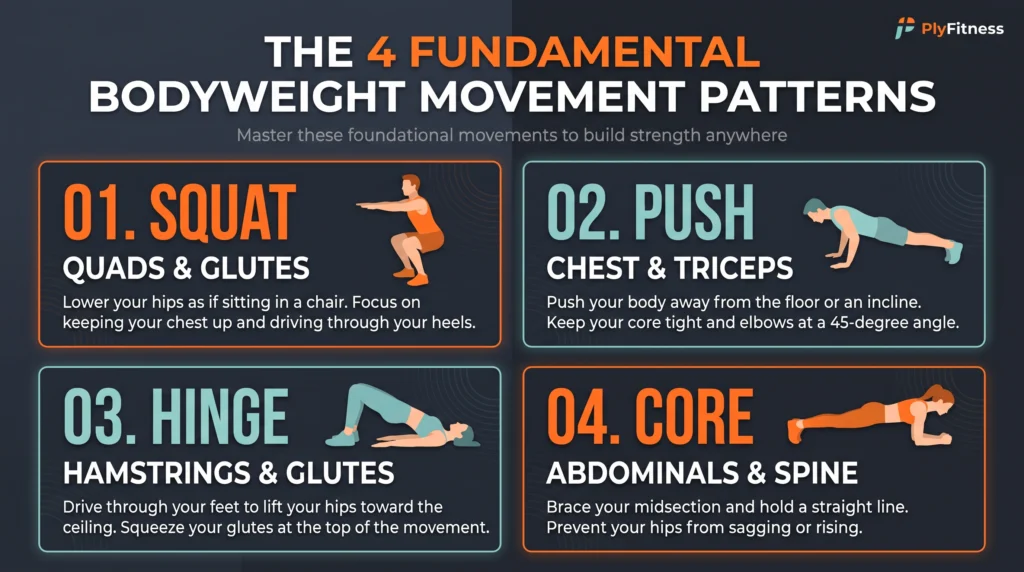
A well-rounded beginner workout should never consist of random exercises. Instead, it should target fundamental biomechanical movement patterns that cover your entire body:
- Squat / Knee Dominant: Works your quadriceps, glutes, and core. (Example: Bodyweight Squats)
- Push / Upper Body: Works your chest, shoulders, and triceps. (Example: Incline or Wall Push-Ups)
- Hinge / Posterior Chain: Works your hamstrings, glutes, and lower back. (Example: Glute Bridges)
- Core Stabilization: Works your abdominals, obliques, and deep spine stabilizers. (Example: Forearm Plank)
Phase 1: The 5-Minute Dynamic Warm-Up
Never skip your warm-up. Warming up increases core temperature, lubricates synovial joints, and primes your nervous system. Perform each movement for 45 to 60 seconds:
- Arm Circles: Stand tall, extend arms out to the sides, and make small circles, gradually increasing size. Reverse direction halfway through.
- High Knee Marching: March in place, lifting your knees up toward your hips while pumping your arms gently.
- Torso Twists: Stand with feet shoulder-width apart and gently twist your upper body left and right, letting your arms swing naturally.
- Hip Circles: Place hands on your hips and make large, smooth circles with your hips to open up the hip joints.
Phase 2: The No-Equipment Full-Body Circuit
This routine is structured as a circuit. Perform each of the five exercises for 30 seconds, followed by 30 seconds of rest. Once you finish all five exercises, rest for 60 to 90 seconds. Complete 3 total rounds.
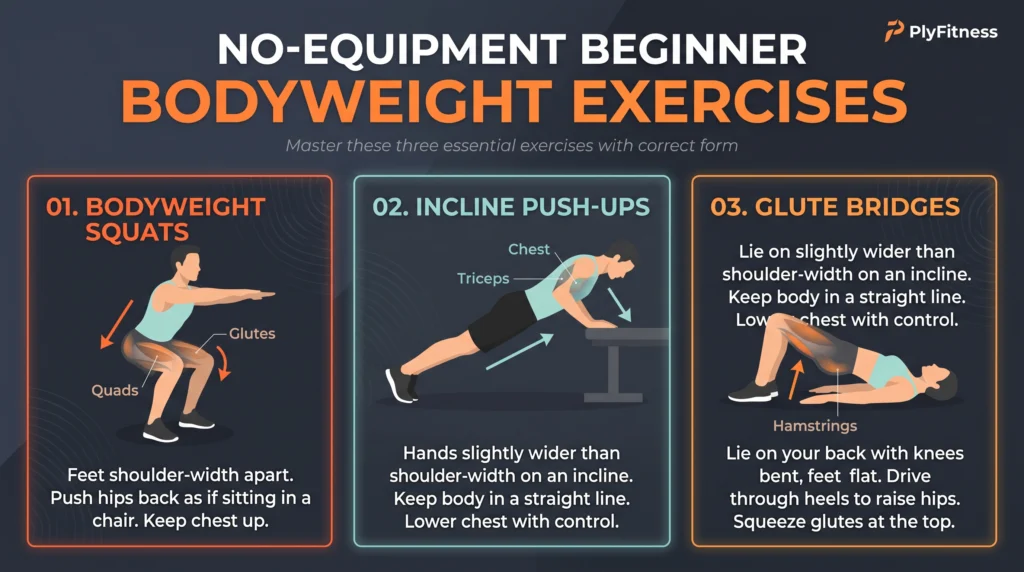
1. Bodyweight Squats (Lower Body)
- How to do it: Stand with feet slightly wider than shoulder-width apart, chest proud, and core braced. Push your hips back and bend your knees as if sitting down in an imaginary chair. Lower until your thighs are parallel to the floor, then push through your heels to return to standing.
- Form Cue: Keep your knees tracking in line with your toes and your heels glued to the floor.
2. Incline or Wall Push-Ups (Upper Body Push)
- How to do it: Place your hands slightly wider than shoulder-width apart on a sturdy elevated surface (like a countertop, sturdy table, or back of a sofa). Step your feet back so your body forms a straight line. Lower your chest toward the surface by bending your elbows at a 45-degree angle, then press back up.
- Form Cue: Squeeze your glutes and brace your core so your hips don’t sag.
3. Glute Bridges (Posterior Chain)
- How to do it: Lie flat on your back on a mat with your knees bent and feet flat on the floor, hip-width apart. Press your heels into the floor and squeeze your glutes to lift your hips toward the ceiling until your body forms a straight line from knees to shoulders. Lower slowly.
- Form Cue: Focus the effort in your glutes and hamstrings rather than pushing through your lower back.
4. Reverse Lunges (Legs & Balance)
- How to do it: Stand tall. Take a large step backward with your right foot and lower your hips until both knees form 90-degree angles. Your back knee should hover just above the floor. Push off your front foot to return to standing, then alternate legs.
- Form Cue: Keep your torso upright and your front knee stable over your ankle.
5. Forearm Plank (Core Stabilization)
- How to do it: Place your forearms on the floor with elbows directly under your shoulders. Extend your legs behind you, resting on your toes. Create a perfectly straight line from your head to your heels by bracing your core and squeezing your glutes. Hold this position for 30 to 45 seconds.
- Form Cue: Do not let your hips pike up in the air or sag toward the floor.
Phase 3: The Cool-Down (5 Minutes)
Conclude your workout with 5 minutes of gentle static stretching to lower your heart rate and reduce muscle tension. Hold each stretch for 30 seconds without bouncing:
- Child’s Pose: Kneel on your mat, sit back onto your heels, and reach your arms forward on the floor to stretch your lats and lower back.
- Seated Hamstring Stretch: Sit on the floor with one leg extended and reach gently toward your toes.
- Chest Opening Stretch: Interlace your fingers behind your back or place your forearm against a doorway to open up your chest.
Your Weekly No-Equipment Schedule
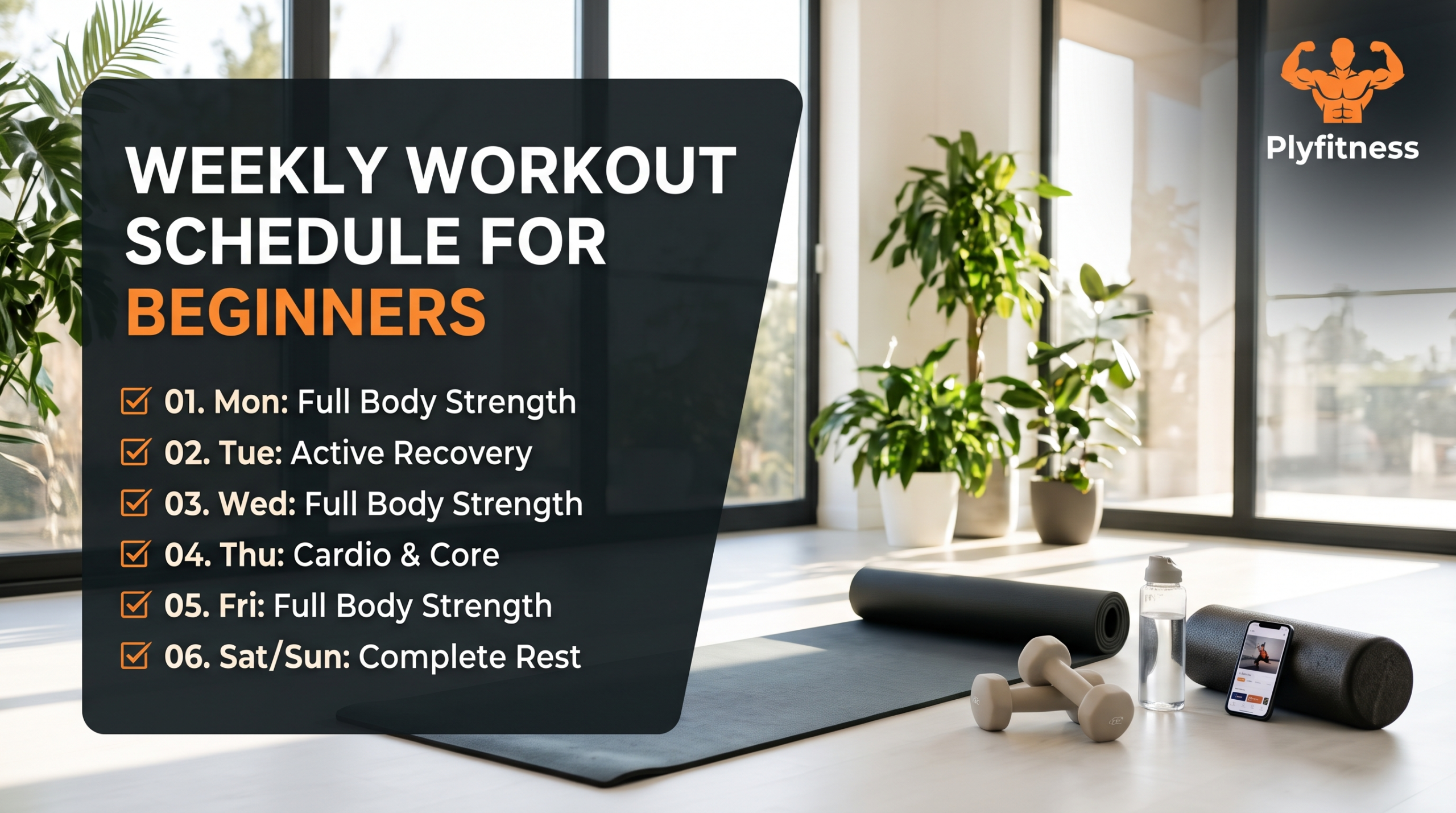
To see steady progress, consistency is paramount. When starting out, train 3 days a week with at least one day of rest or light walking between sessions:
- Monday: No-Equipment Full-Body Circuit (3 Rounds)
- Tuesday: Active Recovery (20-minute brisk walk or gentle stretching)
- Wednesday: No-Equipment Full-Body Circuit (3 Rounds)
- Thursday: Complete Rest
- Friday: No-Equipment Full-Body Circuit (3 Rounds)
- Saturday & Sunday: Active Leisure, Walking, and Complete Rest
Essential Safety and E-E-A-T Guidelines
Training with body weight at home is exceptionally safe, but foundational safety principles must always be observed:
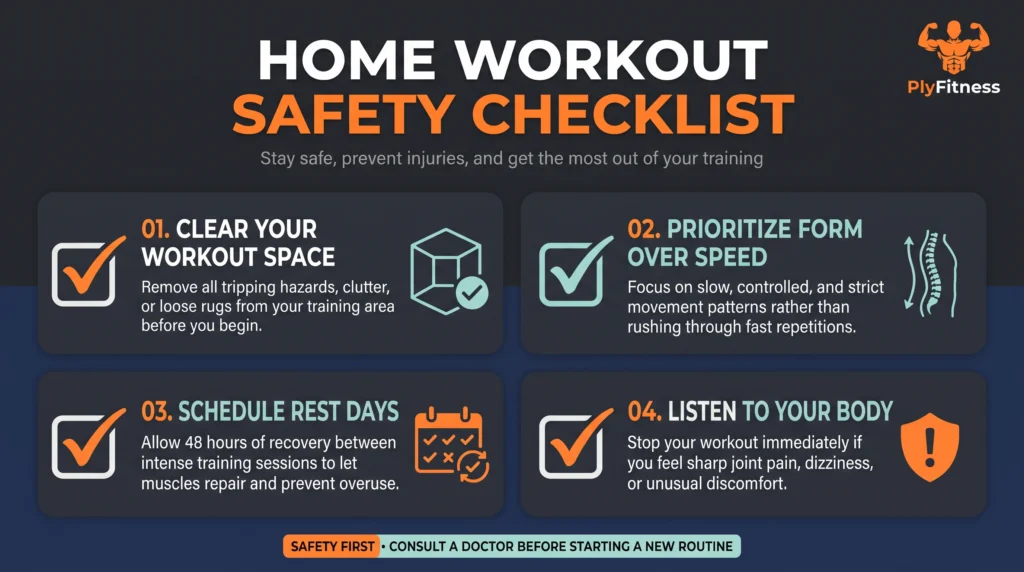
- Clear Your Workout Space: Ensure your living room or bedroom floor is free of sharp objects, slippery rugs, or furniture corners that could cause a tripping hazard.
- Listen to Your Joints: Muscle fatigue and a deep burning sensation are normal. Sharp, sudden pain in your knees, lower back, or shoulders is not—stop the exercise immediately.
- Prioritize Form Over Speed: Moving slowly and with control builds a strong mind-muscle connection and protects your joints from impact stress.
- Consult a Medical Professional: If you have pre-existing cardiovascular conditions, severe joint arthritis, or previous injuries, consult your physician before starting any exercise program.
Conclusion
Starting a fitness journey does not require a gym membership, fancy gear, or complicated machinery. The best home workout for beginners with no equipment relies on fundamental bodyweight movements that build strength, improve mobility, and boost your cardiovascular health from the comfort of your living room. Commit to 3 days a week, focus on your form, track your progress, and take that empowering first step today.
Frequently Asked Questions (FAQs)
Can you really build muscle with no equipment?
Yes, especially as a beginner. Your muscles respond to mechanical tension and progressive overload. By adjusting your leverage, slowing down your tempo, or increasing your repetitions, bodyweight exercises provide more than enough stimulus to build initial muscle mass and tone.
How do I make bodyweight exercises harder as I get stronger?
Once a bodyweight exercise feels easy, you can progress by moving to a harder variation (e.g., shifting from incline push-ups to floor push-ups), slowing down your movement tempo (taking 3 to 4 seconds to lower into a squat), or adding extra repetitions.
What if I cannot complete a full 30 seconds of an exercise?
That is completely normal for beginners. If you fatigue at 20 seconds, take a brief rest within the work window, shake out your muscles, and finish out the remaining seconds. Your endurance will improve rapidly over your first few weeks.
Do I need a yoga mat for home workouts?
While not strictly mandatory, a yoga mat provides essential padding for your knees, elbows, and back during floor exercises like planks and glute bridges, making your workout much more comfortable.
How soon will I see results from bodyweight workouts?
With consistent training (3 times a week) and a balanced nutrition plan, most beginners notice improvements in energy levels, sleep quality, and muscle tone within 4 to 8 weeks.
Can older adults or individuals who are overweight do this routine?
Yes! This routine is exceptionally joint-friendly. Individuals with higher body weight or joint sensitivities can easily modify movements (such as doing wall push-ups and chair squats) to match their comfort level.
Meta Description:
Featured Image Filename: best-home-workout-for-beginners-no-equipment-featured.webp
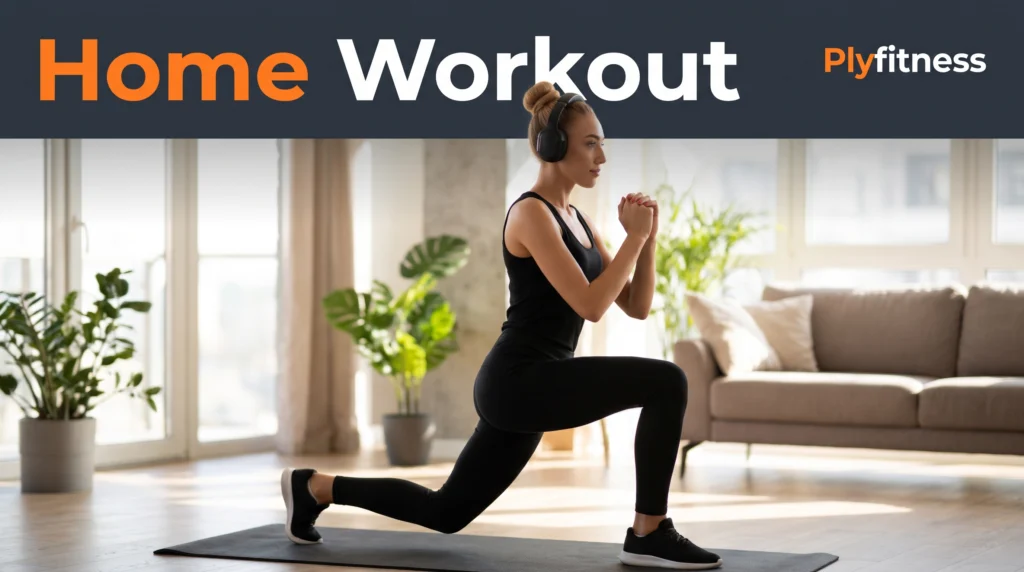
Featured Image Alt Text: A clean living room setup with a yoga mat representing a no-equipment home workout for beginners.