
Starting a fitness journey is one of the most rewarding decisions you can make for your long-term health, but stepping into a gym or picking up a set of dumbbells for the first time can feel incredibly intimidating. With endless advice on body-part splits, complex machines, and advanced training techniques, it is easy to suffer from analysis paralysis. If you are looking for the most efficient, science-backed way to build a foundation of strength and fitness, you need a streamlined approach.
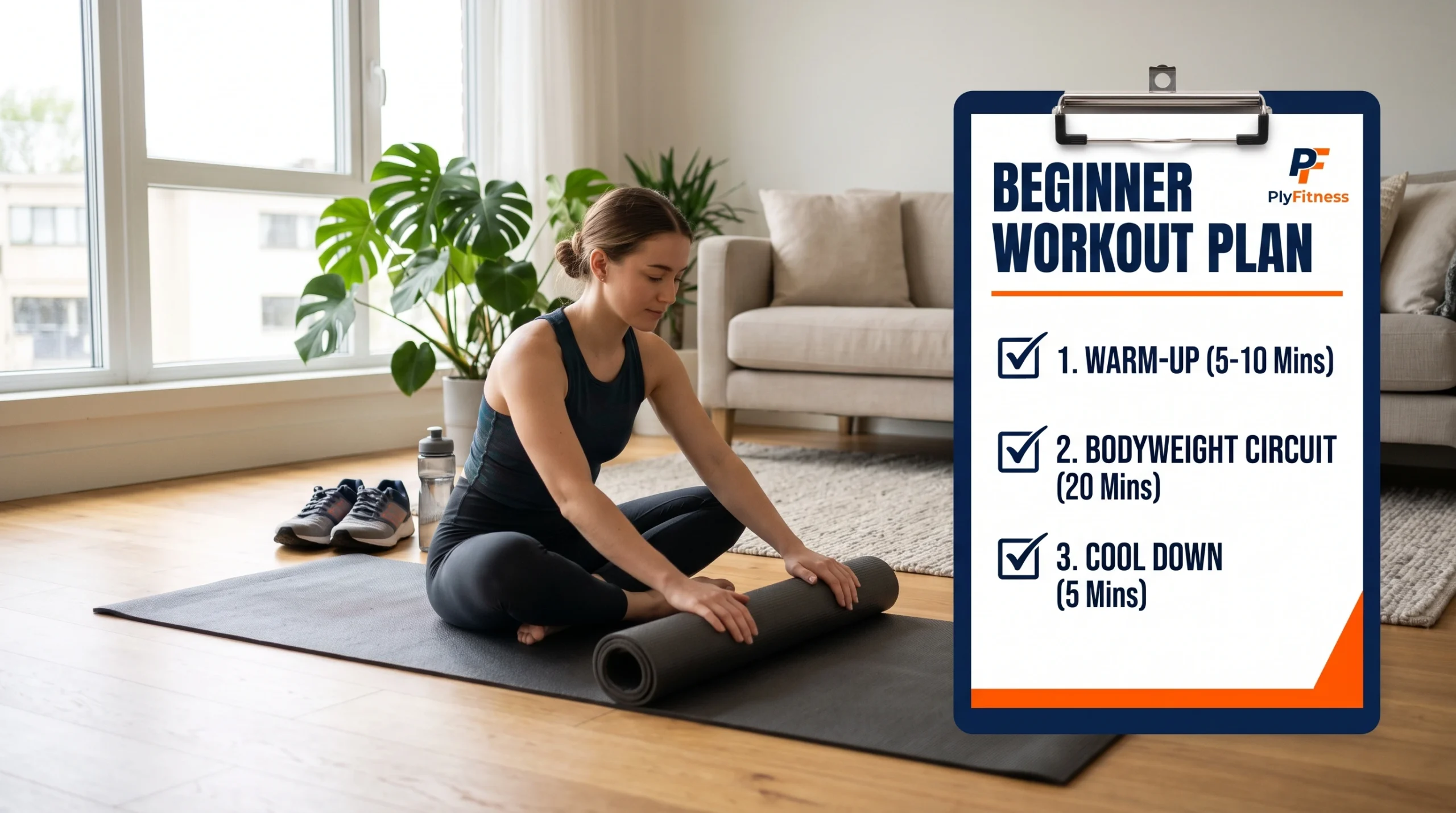
A full body workout for beginners is a highly efficient resistance training routine that targets all major muscle groups—chest, back, shoulders, arms, core, and legs—in a single session. The most effective beginner routine consists of compound movements (exercises that work multiple joints at once) performed two to three days a week. A standard session includes a dynamic warm-up, 4 to 5 core exercises like squats, push-ups, and rows, and a brief cool-down, taking about 30 to 45 minutes to complete.
In this comprehensive, step-by-step guide, we will break down exactly how to structure a full body workout for beginners, the core movement patterns you need to master, and how to safely progress week after week to build sustainable, injury-free strength.
Why Choose a Full Body Workout?
When you first begin strength training, your nervous system and muscles are highly responsive to new stimuli. You do not need to dedicate an entire hour just to your biceps or chest to see growth. In fact, doing so can lead to excessive soreness and burnout. Here is why the full-body approach is the gold standard for novices:
- Optimal Training Frequency: Muscle protein synthesis (the process of building muscle) remains elevated for about 24 to 48 hours after a workout. By training your entire body three days a week (e.g., Monday, Wednesday, Friday), you stimulate muscle growth multiple times per week rather than just once.
- Time Efficiency: Full body workouts focus on compound exercises—movements like squats and rows that engage multiple muscle groups simultaneously. This allows you to get a highly effective workout in under 45 minutes.
- Faster Neurological Adaptation: As a beginner, your initial strength gains come from your brain learning how to efficiently fire your muscle fibers. Practicing the same fundamental movements three times a week helps you master proper form faster than doing an exercise only once a week.
- Flexibility: If you miss a workout on Wednesday, your whole week isn’t ruined. Because every session targets the whole body, you can simply pick up where you left off without neglecting specific muscle groups for weeks at a time.
The Anatomy of a Perfect Beginner Routine
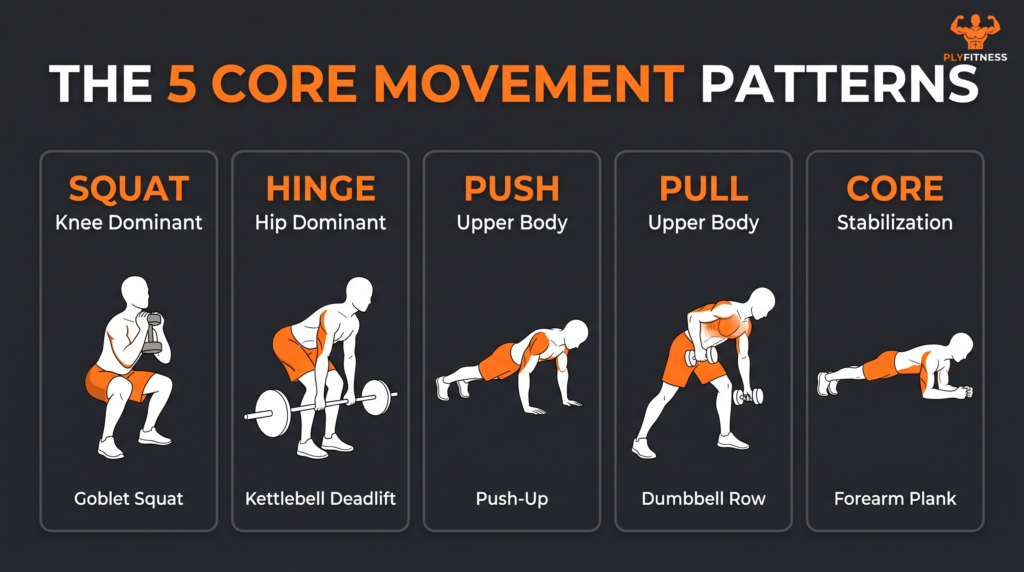
To ensure your full body workout for beginners is balanced and effective, you should not pick random exercises. Instead, think in terms of “movement patterns.” A well-rounded session should include one exercise from each of the following five categories:
- Squat / Knee Dominant (Lower Body Push): Targets the quadriceps, glutes, and calves. Examples: Bodyweight squats, goblet squats, lunges.
- Hinge / Hip Dominant (Lower Body Pull): Targets the hamstrings, glutes, and lower back. Examples: Glute bridges, Romanian deadlifts (RDLs).
- Upper Body Push: Targets the chest, shoulders, and triceps. Examples: Push-ups, dumbbell bench presses, overhead presses.
- Upper Body Pull: Targets the back (lats, rhomboids) and biceps. Examples: Dumbbell rows, inverted rows, lat pulldowns.
- Core Stabilization: Targets the abdominals and obliques. Examples: Planks, bird-dogs, dead bugs.
Phase 1: The Essential Dynamic Warm-Up
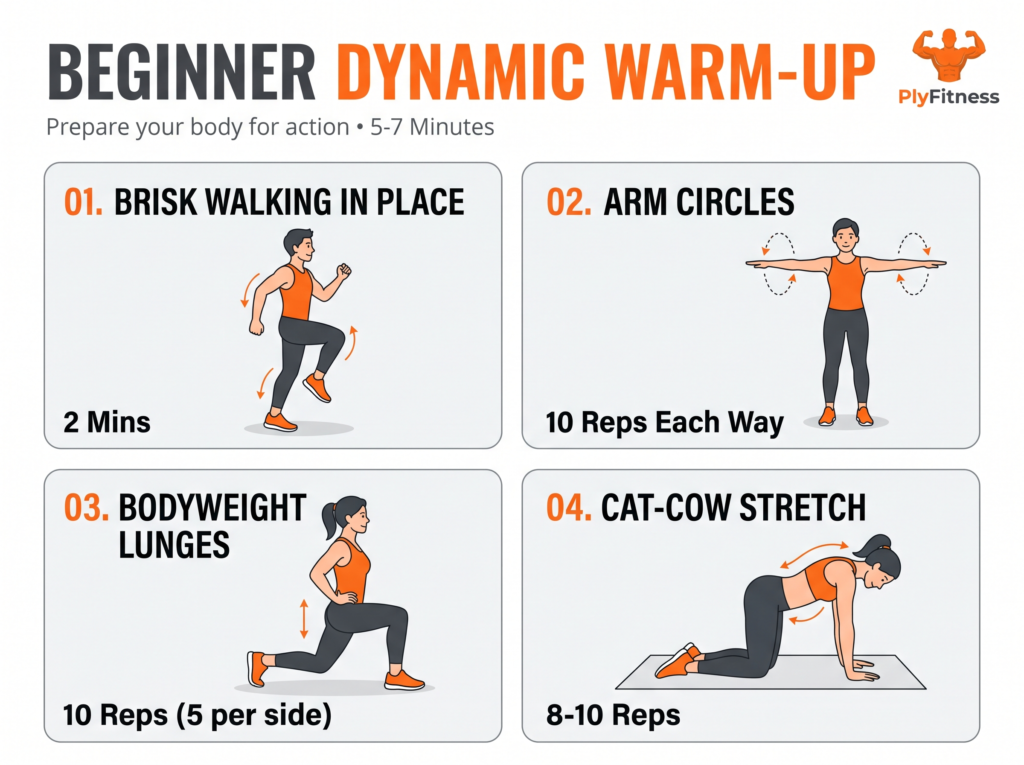
Before touching a weight, you must prepare your body. A dynamic warm-up increases your core temperature, enhances joint mobility, and primes your nervous system for the work ahead. Spend 5 to 7 minutes on the following routine:
- Jumping Jacks or Brisk Walking: 2 minutes to elevate the heart rate.
- Arm Circles: 30 seconds forward, 30 seconds backward to lubricate the shoulder joints.
- Bodyweight Lunges: 10 reps per leg to open up the hips and engage the legs.
- Cat-Cow Stretches: 10 slow repetitions on your hands and knees to mobilize the thoracic spine.
- High Plank Hold: 30 seconds to wake up the core musculature.
Phase 2: The Step-by-Step Full Body Workout for Beginners
This routine can be performed at a gym or at home using a pair of moderate-weight dumbbells. Perform this exact routine 2 to 3 times per week.
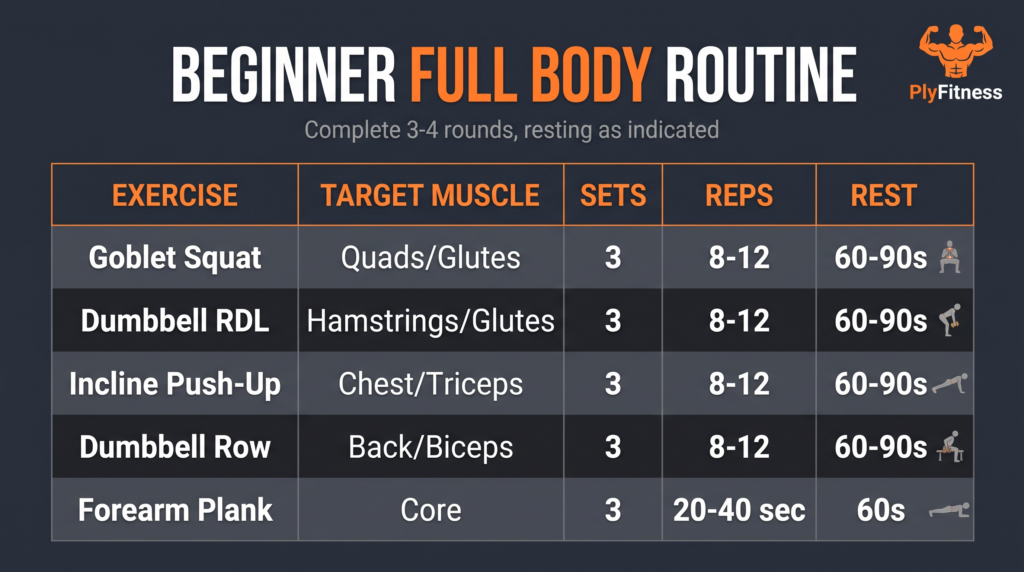
For each exercise, aim for 3 sets of 8 to 12 repetitions. Rest for 60 to 90 seconds between each set.
1. Goblet Squat (Squat Pattern)
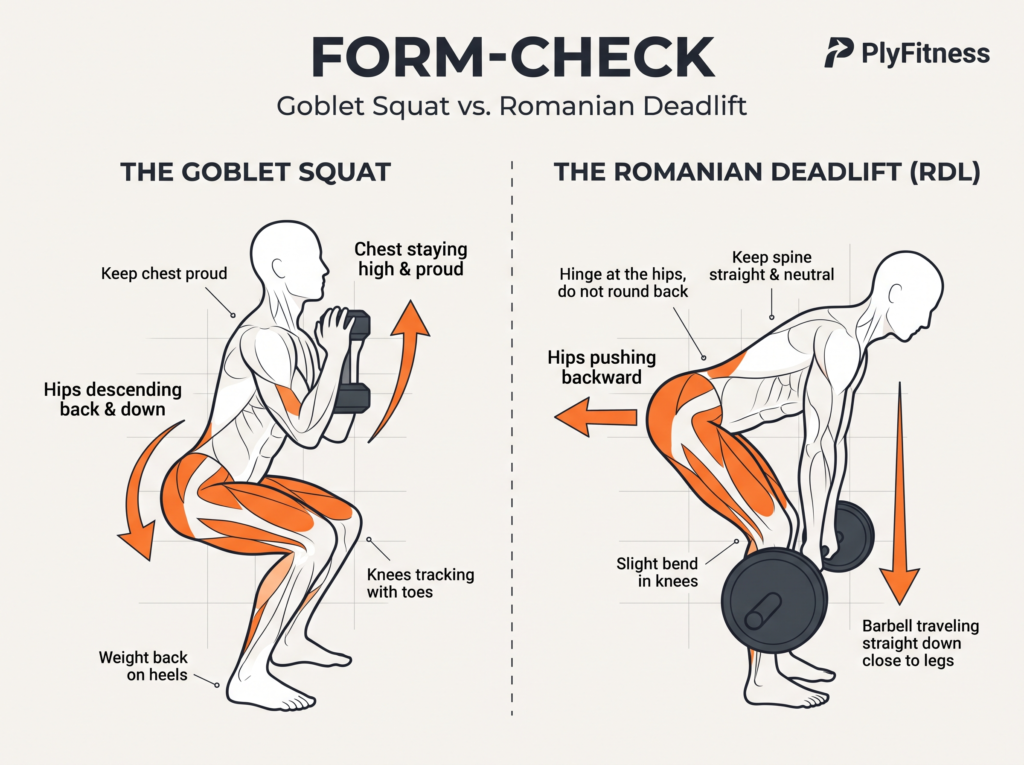
The goblet squat is perfect for beginners because holding the weight in front of your chest naturally forces you to keep your torso upright and your core engaged.
- How to do it: Hold a single dumbbell vertically against your chest with both hands. Stand with your feet slightly wider than shoulder-width apart, toes pointed slightly outward. Brace your core and push your hips back, bending your knees to lower into a squat. Keep your chest up and your back flat. Push through your heels to stand back up, squeezing your glutes at the top.
- Safety cue: Do not let your knees cave inward as you push up. Keep them tracking over your toes.
2. Dumbbell Romanian Deadlift (Hinge Pattern)
This movement builds the posterior chain (the back of your body), which is vital for posture and lower back health.
- How to do it: Hold a dumbbell in each hand in front of your thighs, palms facing your legs. Stand with feet hip-width apart and a slight, soft bend in your knees. Hinge at your hips, pushing your glutes backward while keeping your back perfectly straight. Lower the weights down the front of your legs until you feel a deep stretch in your hamstrings (usually just below the knees). Drive your hips forward to return to the standing position.
- Safety cue: The movement comes from the hips, not the lower back. If your lower back rounds, you have gone down too far.
3. Incline Push-Ups or Dumbbell Bench Press (Push Pattern)
Building upper body pushing strength is essential. If standard push-ups on the floor are too difficult, elevate your hands.
- How to do it (Incline Push-Up): Place your hands slightly wider than shoulder-width on a sturdy bench, couch, or counter. Step your feet back so your body forms a straight line from head to heels. Lower your chest to the bench by bending your elbows at a 45-degree angle from your torso. Push back up to the starting position.
- Safety cue: Do not let your hips sag toward the floor. Keep your core squeezed tightly.
4. Dumbbell Bent-Over Rows (Pull Pattern)
Rows are crucial for counteracting the forward-hunched posture caused by sitting at desks and looking at phones.
- How to do it: Hold a dumbbell in each hand. Hinge forward at the hips at about a 45-degree angle, keeping your back straight and knees slightly bent. Let the dumbbells hang down naturally. Pull the dumbbells up toward your ribcage, squeezing your shoulder blades together at the top of the movement. Slowly lower the weights back down.
- Safety cue: Pull with your back muscles, not just your biceps. Imagine crushing a walnut between your shoulder blades.
5. Forearm Plank (Core Stabilization)
The plank builds deep core stability, which protects your spine during all other lifts.
- How to do it: Get into a push-up position, but rest your weight on your forearms instead of your hands. Your elbows should be directly beneath your shoulders. Squeeze your glutes and brace your abdominals as if you are about to be punched in the stomach. Hold this perfectly straight line.
- Sets and Reps: Instead of counting reps, aim for 3 sets of 20 to 40-second holds.
Phase 3: The Cool-Down and Recovery
After completing your sets, spend 3 to 5 minutes cooling down. This brings your heart rate down safely and reduces muscle tension. Perform gentle, static stretches, holding each for 30 seconds. Focus on a standing quad stretch, a seated hamstring stretch, and a chest opening stretch in a doorway.
Remember, muscles do not grow while you are lifting weights; they grow while you are resting. The Centers for Disease Control and Prevention (CDC) recommends muscle-strengthening activities on 2 or more days a week. Ensure you have at least one full day of rest or light active recovery (like walking or yoga) between your full body strength sessions.
Structuring Your Weekly Schedule
A sustainable routine is one that fits your life. Here is an ideal weekly template for a beginner:
- Monday: Full Body Workout
- Tuesday: Active Recovery (30-minute walk or stretching)
- Wednesday: Full Body Workout
- Thursday: Rest
- Friday: Full Body Workout
- Saturday & Sunday: Active Recovery, Leisurely Hobbies, or Full Rest
Essential Safety and E-E-A-T Guidelines for Beginners
To ensure your fitness journey is safe and effective, adhere to these fundamental principles:
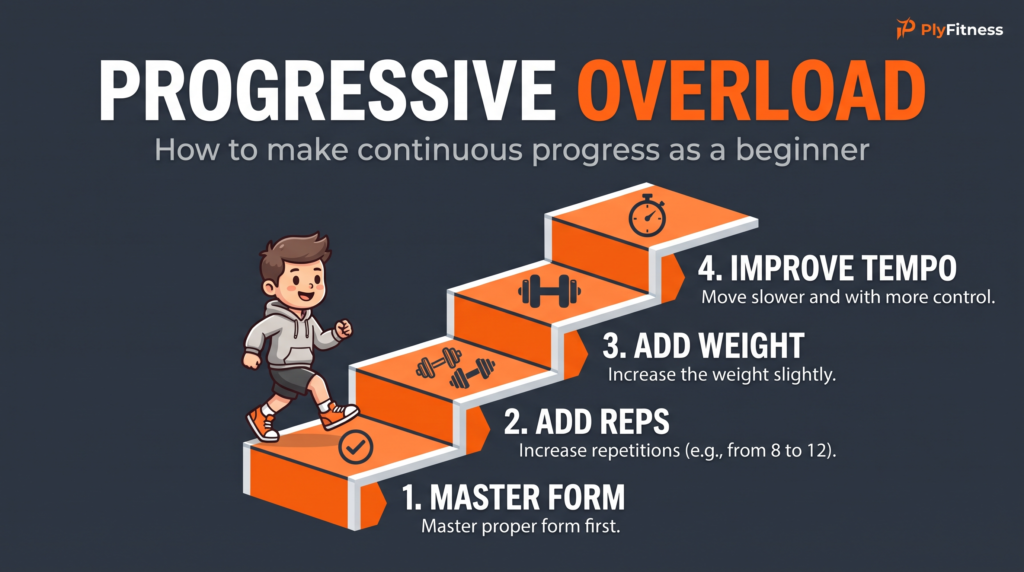
- Prioritize Form Over Weight: The ego is your biggest enemy in fitness. If you cannot complete a set with perfect form, the weight is too heavy. Drop the weight and master the technique first.
- Embrace Progressive Overload: To continue seeing results, your workouts must gradually become more challenging. Once you can easily complete 3 sets of 12 reps of an exercise with perfect form, it is time to slightly increase the weight or slow down the tempo.
- Nutrition Matters: Strength training breaks down muscle tissue. You must consume adequate protein and stay hydrated to repair that tissue.
- Consult a Professional: If you have pre-existing cardiovascular conditions, joint issues, or chronic pain, consult a healthcare provider or a certified physical therapist before beginning a resistance training program.
Conclusion
Starting a full body workout for beginners does not require hours of daily commitment or complicated machinery. By focusing on fundamental movement patterns—squatting, hinging, pushing, pulling, and bracing your core—you can build a resilient, strong, and healthy body with just a few sessions a week. Start with light weights, prioritize your form, respect your rest days, and celebrate the small improvements you make each week. Consistency will always beat intensity, so take that first step, stick to the plan, and watch your body transform.
Frequently Asked Questions (FAQs)
How many times a week should a beginner do a full body workout?
Beginners should aim to complete a full body workout 2 to 3 times per week. This provides enough stimulus for muscle growth while allowing adequate time—at least 24 to 48 hours—for recovery and muscle repair between sessions.
How long should a beginner full body workout last?
A well-structured beginner session should take between 30 and 45 minutes, including the dynamic warm-up and cool-down. If your workout is taking much longer than an hour, you may be resting too long between sets or doing too many unnecessary exercises.
Is it normal to be sore after a full body workout?
Yes, Delayed Onset Muscle Soreness (DOMS) is highly common when you first start resistance training. It usually peaks 24 to 48 hours after your workout. Light activity like walking, staying hydrated, and getting enough sleep will help alleviate the soreness.
Can I do a full body workout at home without equipment?
Absolutely. While dumbbells offer easily adjustable resistance, you can perform a highly effective full body workout using just your body weight. You can substitute goblet squats with bodyweight squats, and dumbbell rows with inverted rows under a sturdy table or by using resistance bands.
When should I increase the weight I am lifting?
Use the “2-for-2 rule” as a guideline. If you can complete 2 more repetitions than your target (e.g., 14 reps instead of 12) on your final set of an exercise for 2 consecutive workouts, it is time to gently increase the weight for your next session.
Will lifting weights make me bulky?
No. Building significant, “bulky” muscle mass requires years of dedicated, high-volume training and a massive surplus of calories. For the vast majority of beginners, a full body strength routine will result in a lean, toned, and athletically capable physique.